
Home › CNC Machining › Carbon Fiber CNC Machined Parts
CNC Machined Carbon Fiber Parts Manufacturer
Custom carbon fiber CNC machined parts manufactured from engineering drawings with precise holes, pockets, slots and complex geometries. We support prototypes, low-volume projects and repeat OEM production with controlled tolerances and consistent quality.
Precision CNC Machined Carbon Fiber Parts for OEM Applications
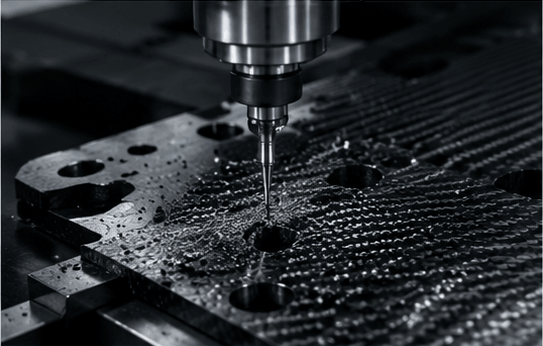
Carbosources specializes in CNC machining carbon fiber laminates for demanding industrial applications where low weight, stiffness and precision interfaces are essential. Our machining capability supports profile cutting, drilling, milling, pockets, slots, countersinks, chamfers and finished edge preparation.
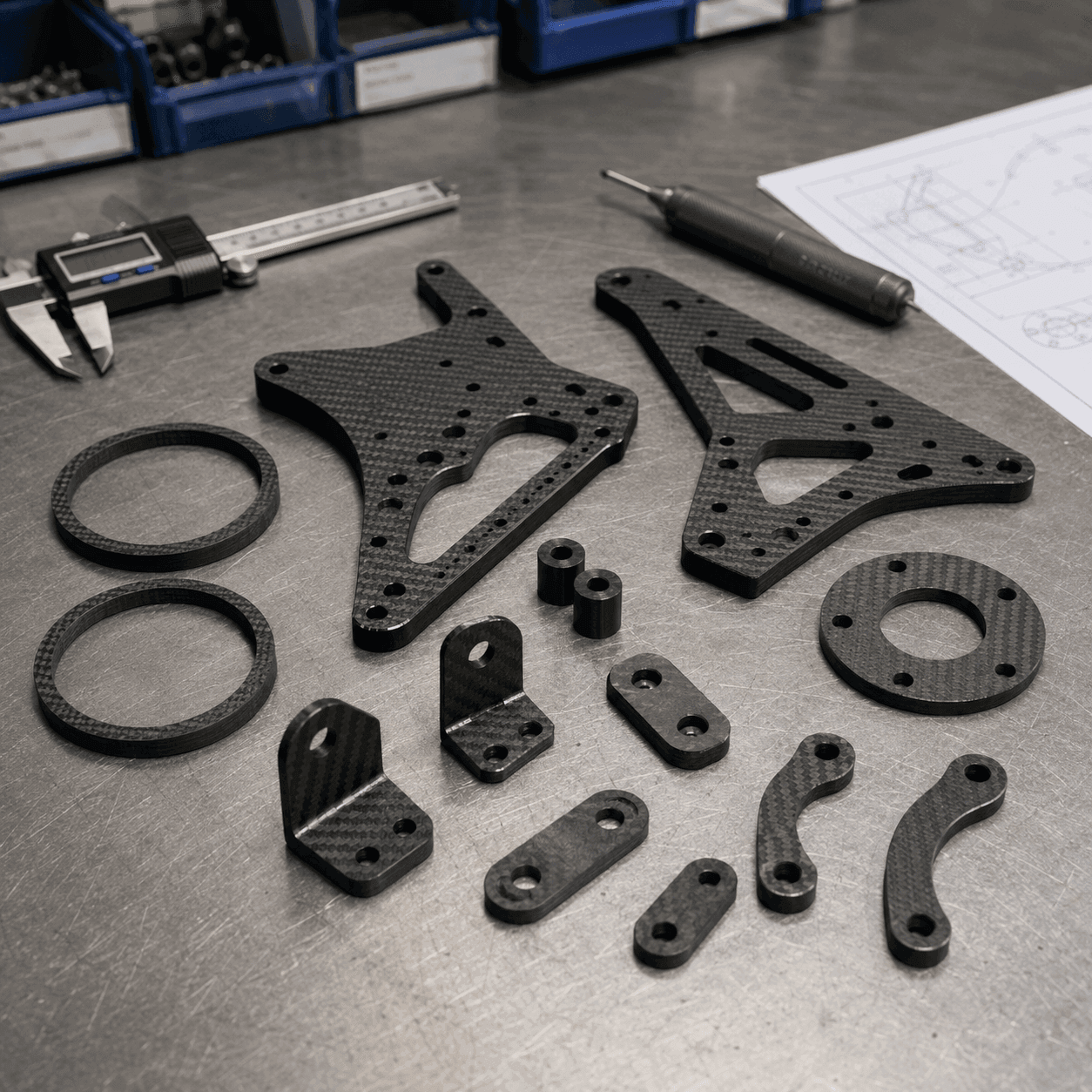
From prototype development to repeat OEM production, we machine brackets, mounting plates, drone frames, robotic components and drawing-based assemblies. Material selection, tooling strategy, dust extraction and inspection are controlled to reduce delamination and improve repeatability.
Tight Tolerances
Drawing-based dimensional control
Clean Edges
Controlled cutting and finishing
Custom Geometry
Complex holes, pockets and slots
OEM Support
Prototype through repeat production
What Are CNC Machined Carbon Fiber Parts?
CNC machined carbon fiber parts are precision components produced by removing material from cured carbon fiber laminate, plate or composite profile. Computer-controlled machining creates repeatable contours, mounting holes, pockets, slots and assembly interfaces.
These components combine lightweight composite performance with accurate geometry for aerospace, automotive, drones, robotics, industrial automation and specialized equipment.
- Lightweight structures with high stiffness
- Accurate hole patterns and precision interfaces
- Corrosion-resistant, non-rusting components
- Repeatable production from digital drawings
Complex Geometry
Features difficult to create by manual cutting
Precision Assembly
Reliable alignment and fit
Lightweight Performance
High stiffness with reduced mass
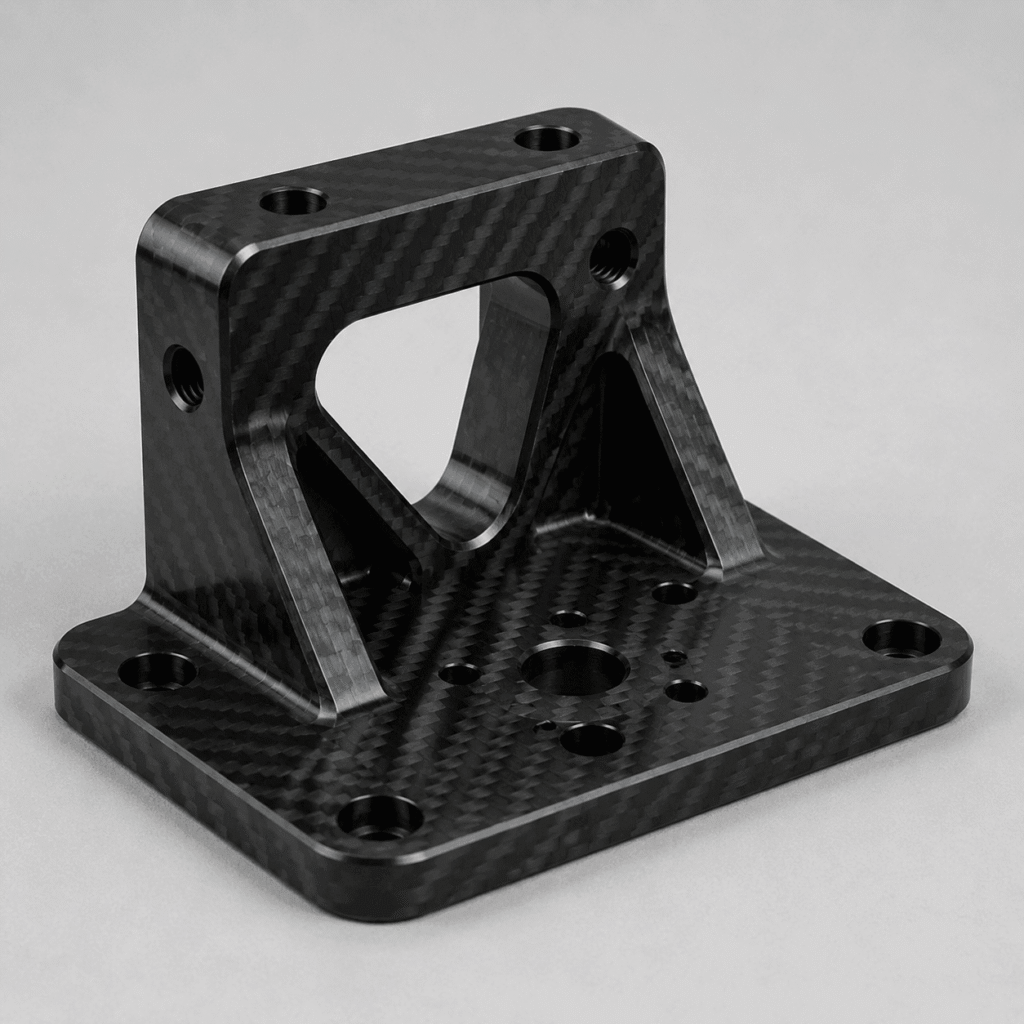
CNC Machined Carbon Fiber Angle Brackets
Types of Carbon Fiber CNC Machined Parts
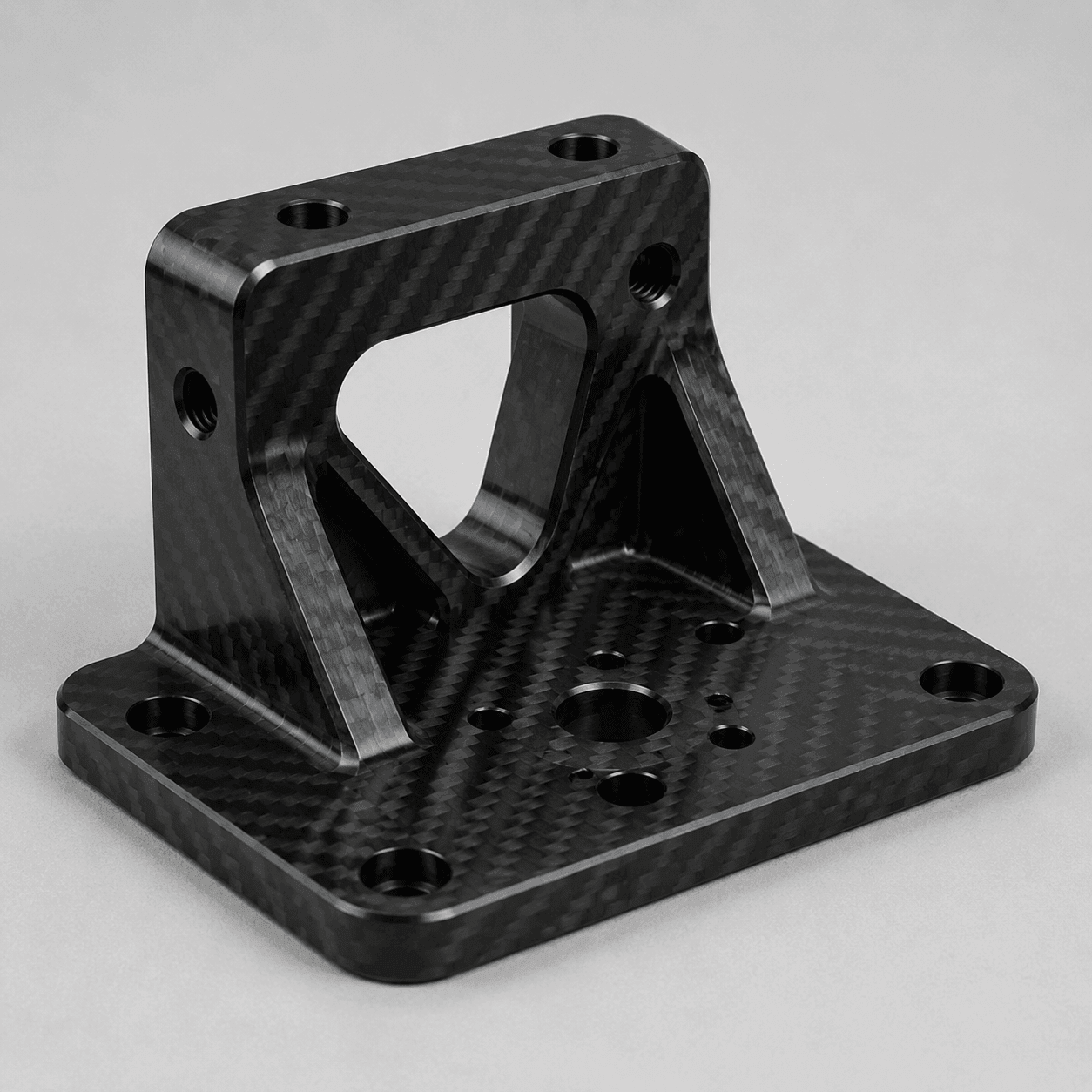
Carbon Fiber Brackets
Structural brackets with mounting holes, contours and complex geometry.
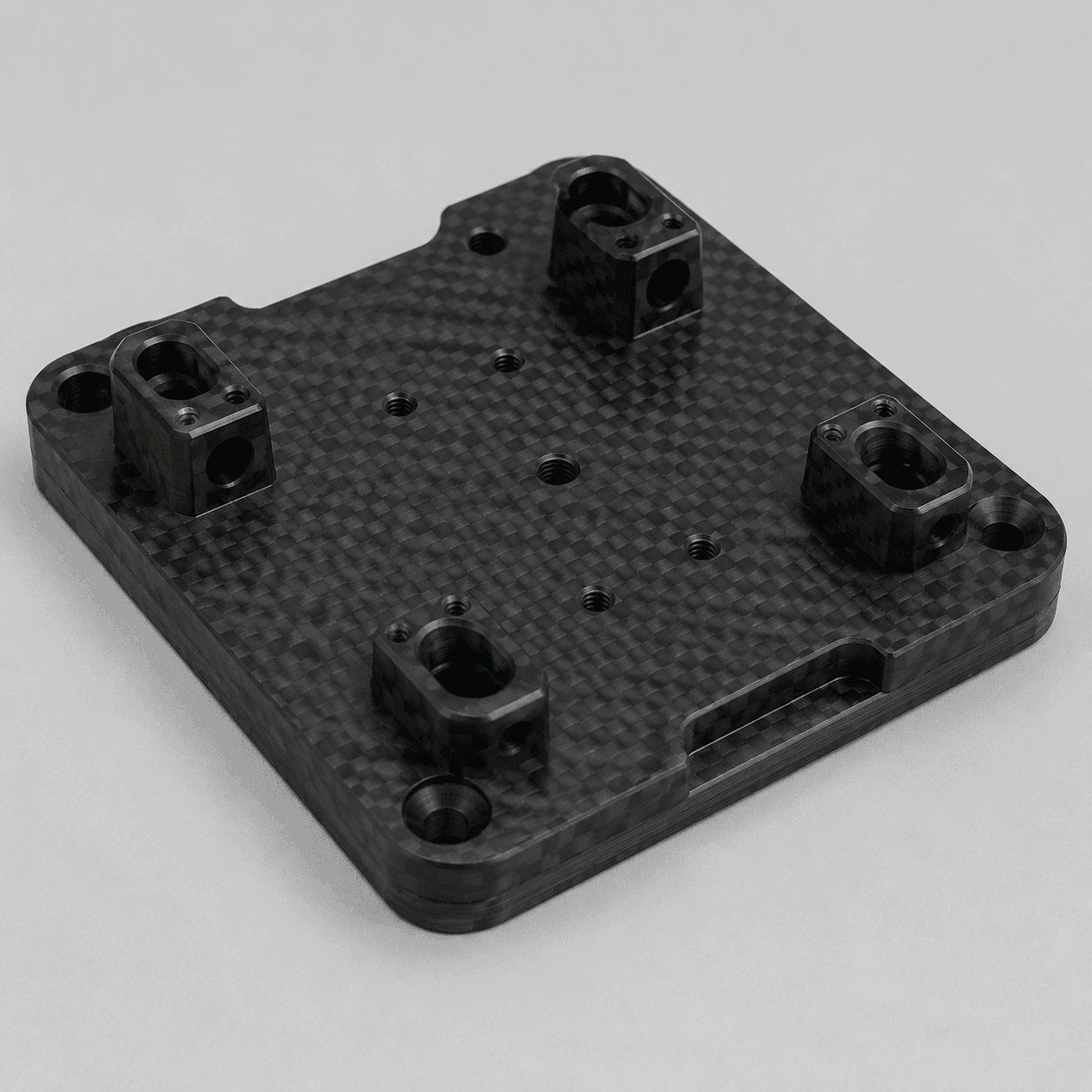
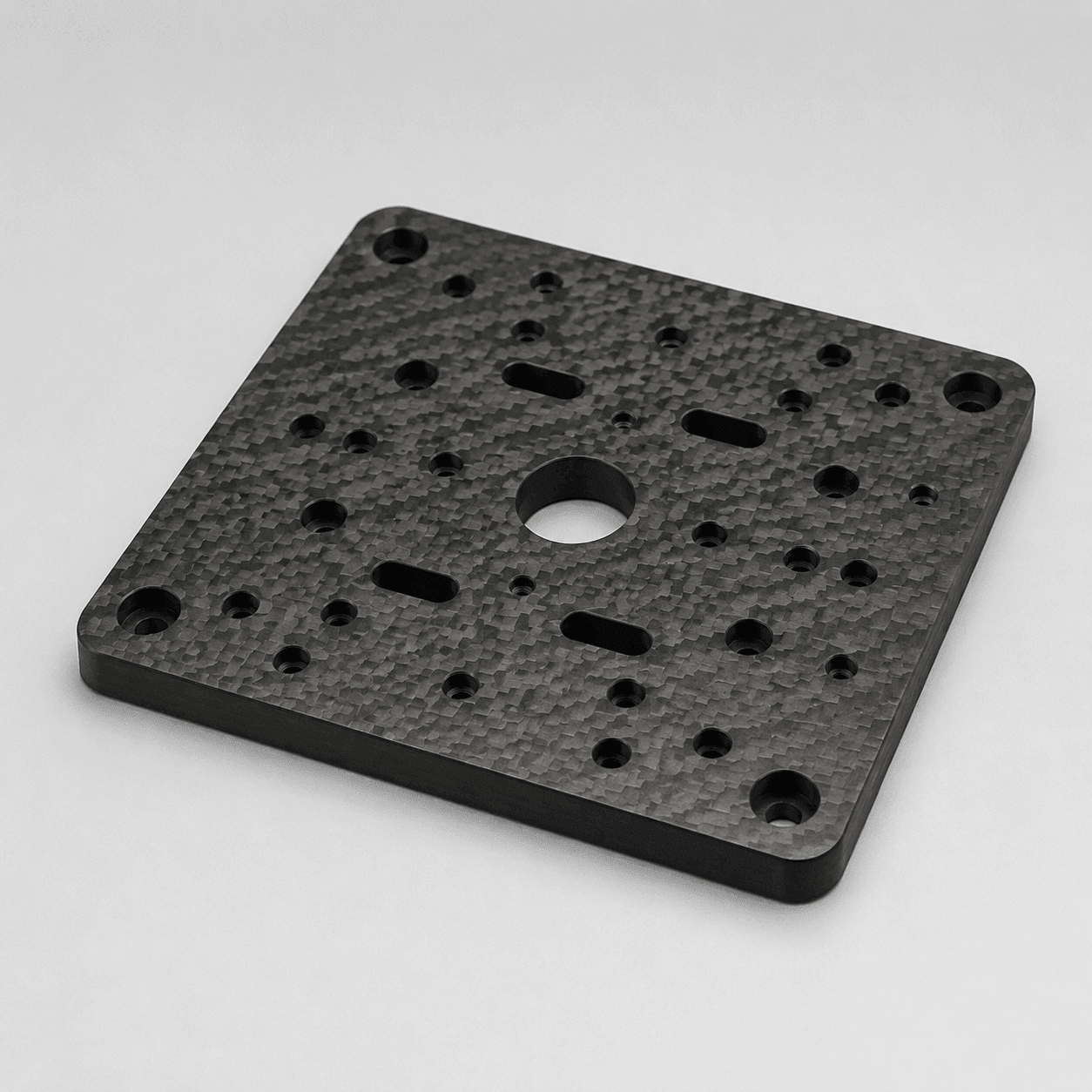
Carbon Fiber Mounting Plates
Precision plates with drilled, milled and countersunk features.
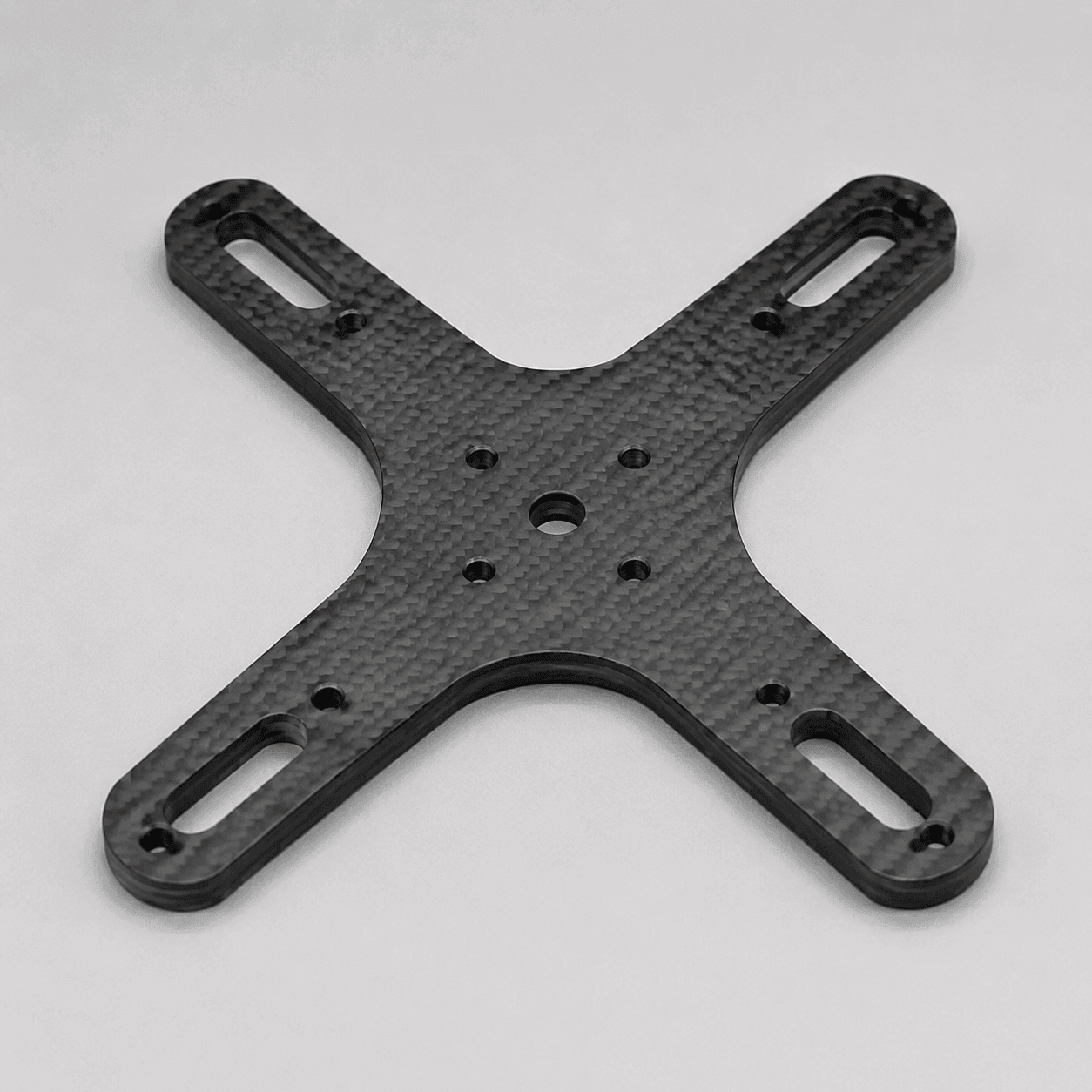
Carbon Fiber Drone Frames
Lightweight center plates, arms and equipment mounts for UAV systems.
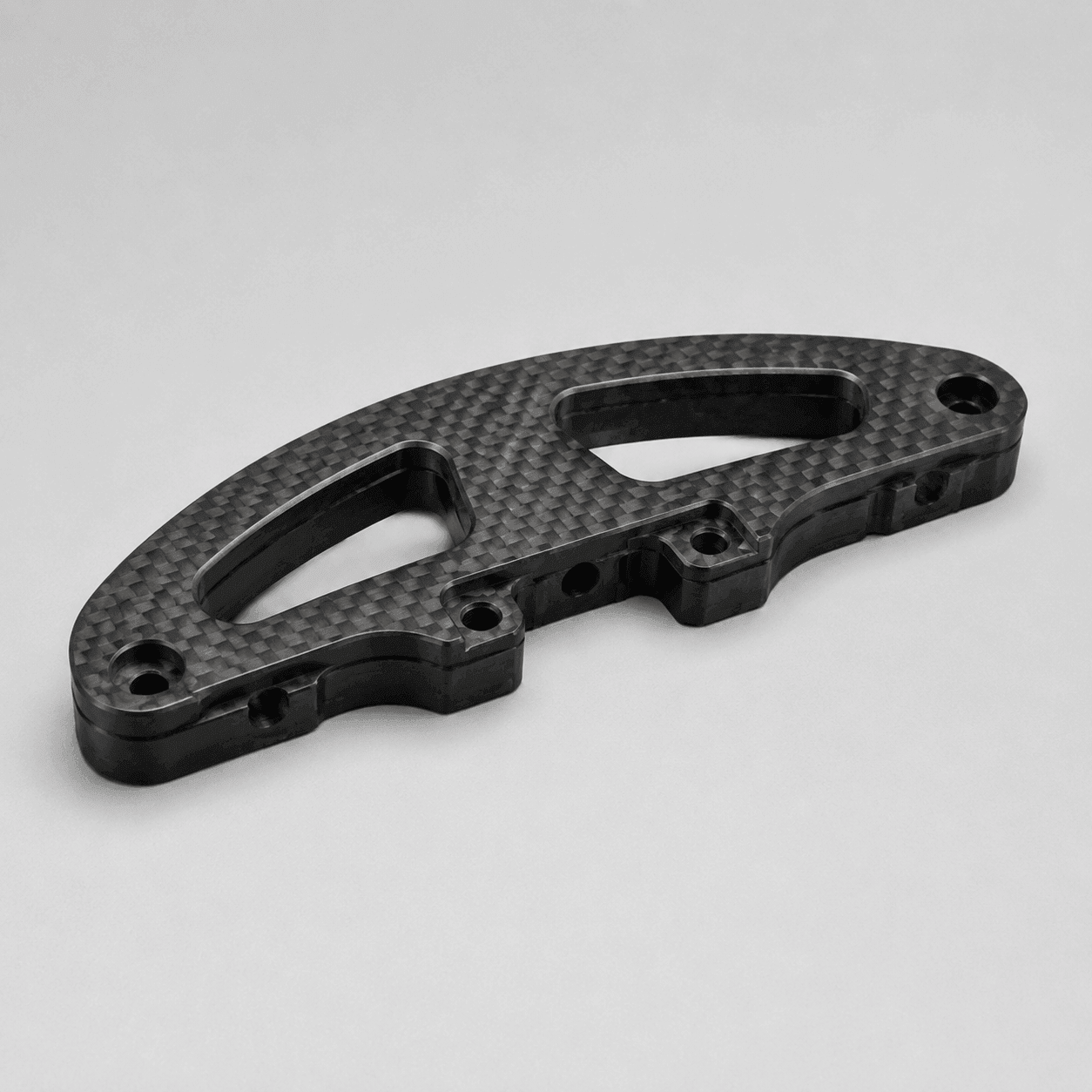
Carbon Fiber Automotive Parts
Interior, exterior and structural parts with accurate interfaces.
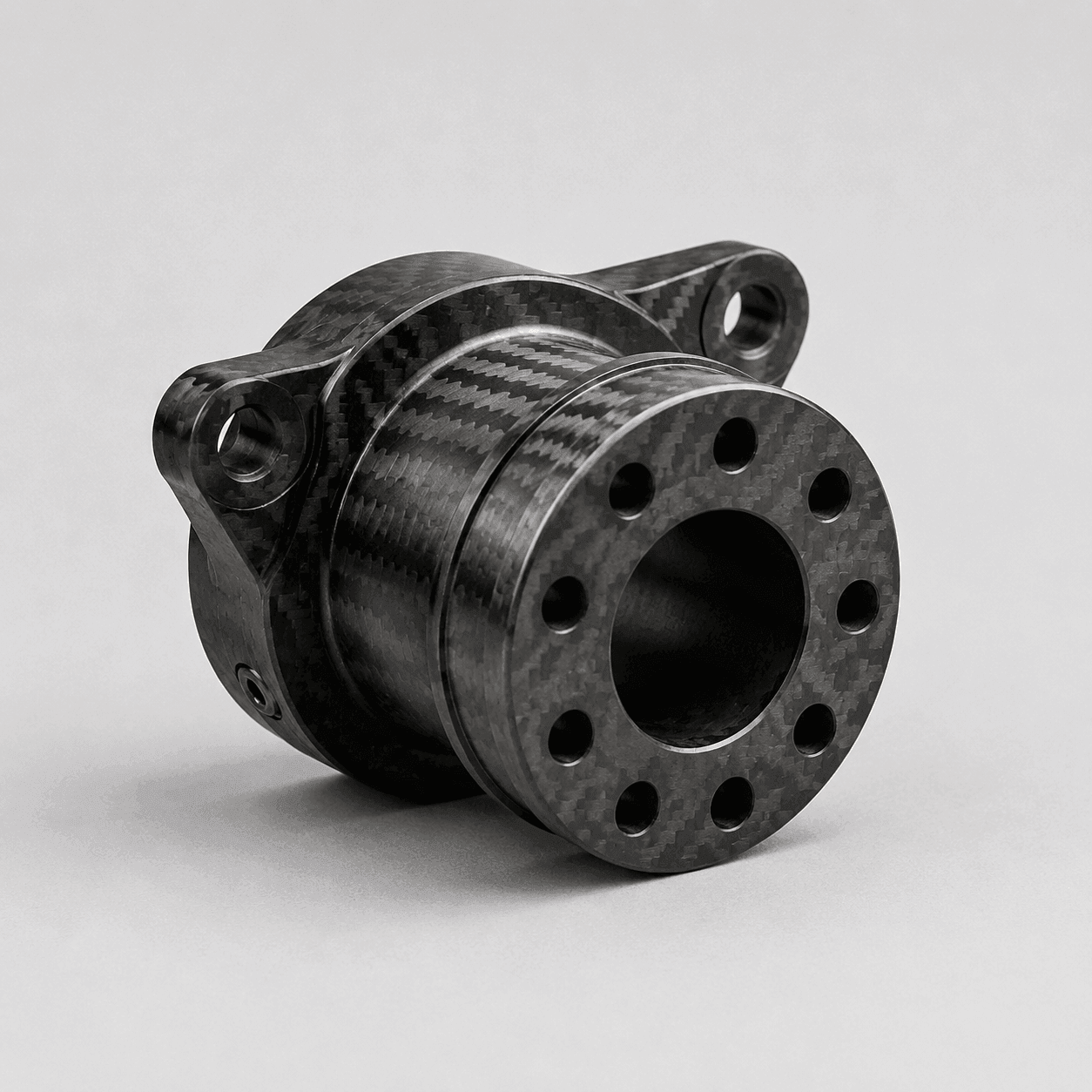
Carbon Fiber Robotic Components
Robot arms, joints, end-effectors and precision automation parts.
Custom Carbon Fiber Assemblies
Drawing-based components with bonded inserts and sub-assemblies.
Carbon Fiber CNC Machining Materials and Sheet Selection
Material selection directly influences strength, stiffness, edge quality and machining performance. Available options include 3K twill weave, 3K plain weave, unidirectional laminates and quasi-isotropic multi-angle layups.
Thickness, fiber orientation, resin system and surface finish should be matched to load direction and final geometry. Machining direction, hole placement and edge distance must be reviewed to reduce the risk of delamination and local stress concentration.
Glossy, matte, textured and ground surfaces can be selected according to cosmetic and functional requirements.
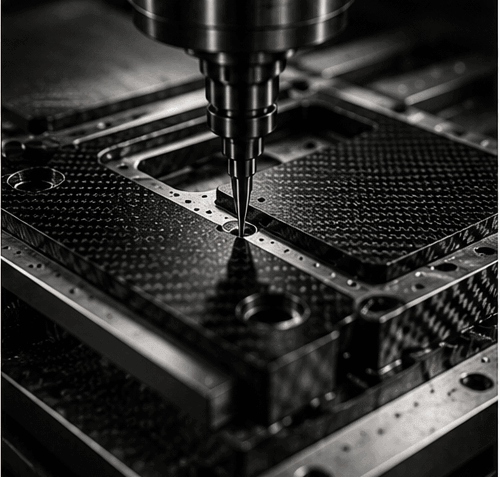
Carbon Fiber CNC Machining Capabilities
Profile Cutting
High-precision outer contours
Drilling
Accurate holes and patterns
Pockets & Milling
Controlled depths and surfaces
Slots & Grooves
Mechanical and assembly interfaces
Chamfers & Bevels
Finished and prepared edges
Countersinks
Flush fastener locations
Edge Finishing
Deburring, polishing and sealing
Bonded Inserts
Metal interfaces and threaded solutions
Tapping Strategy
Project-specific threaded features
Assembly Services
Bonding, fitting and kitting
Surface Treatment
Matte, glossy or coated finish
Inspection & Reporting
Dimensional and traceability records
CNC Machining Process for Carbon Fiber Parts
1
Drawing Review
Review drawings, GD&T, features and assembly needs.
2
Material Selection
Select laminate, thickness, layup and finish.
3
CNC Programming
Create toolpaths, holding and machining strategy.
4
Precision Machining
Machine holes, pockets, slots and profiles.
5
Edge Finishing
Deburr, polish, seal or finish machined edges.
6
Quality Inspection
Verify dimensions, appearance and documentation.
Custom Carbon Fiber Parts Manufacturing
We manufacture custom CNC machined carbon fiber parts to customer drawings, CAD files and application requirements. Our team can support design review, material selection, machining strategy and inspection planning.
- Custom dimensions, hole patterns and complex contours
- Tight tolerances and drawing-based inspection
- Threaded holes, bonded inserts and hardware integration
- Glossy, matte, polished, coated or sealed finishes
- Rapid prototyping and low-volume development
- Repeat OEM production and export packaging
Typical Machining Tolerances
- General dimensional tolerance: project-specific
- Precision hole and position control available
- Parallelism, perpendicularity and concentricity review
- Tighter tolerances evaluated from drawings
Applications
- Aerospace brackets and supports
- Drone frames and payload mounts
- Robotics and automation fixtures
- Automotive composite components
- Medical and sports equipment
- Marine and energy systems
Quality Control & Inspection
- CMM and dimensional inspection
- Visual and edge-quality inspection
- Material traceability
- Thread and insert checks
- In-process and final reports
- Lot tracking and export documentation
Carbon Fiber CNC Machining vs Waterjet Cutting vs Laser Cutting
Different manufacturing methods offer different strengths. CNC machining provides precise holes, pockets, chamfers and three-dimensional features. Waterjet cutting is useful for flat two-dimensional contours without a heat-affected zone. Laser cutting is fast for some sheet materials but can create heat damage and is often less suitable for structural carbon fiber laminates.
| Process | Precision | Edge Quality | Geometry | Best Use |
|---|---|---|---|---|
| CNC Machining | High | Clean, controlled | Complex 2D/3D features | Precision parts and assemblies |
| Waterjet Cutting | Medium | Good, slightly rough | 2D contours | Flat profiles and thicker materials |
| Laser Cutting | Medium | Heat-affected risk | 2D contours | Thin decorative materials |
Design Guidelines for CNC Machined Carbon Fiber Parts
Good design improves machining quality and structural reliability. Fiber orientation should follow the primary load path, while hole location and edge distance should limit local splitting and delamination. Closely spaced holes, thin walls and sharp internal corners may require design adjustment.
Fasteners, threaded holes, bonded inserts and adhesive joints should be planned early. Direct tapping may be suitable only for certain laminate thicknesses and loads; bonded metal inserts are often preferred for repeated assembly.
Provide complete 2D drawings or 3D models with material, thickness, finish, tolerance and inspection requirements. This allows machining strategy, workholding, dust extraction, edge finishing and quotation to be evaluated accurately.