
Home › Carbon Fiber Products › Carbon Fiber Rods
Carbon Fiber Rods Manufacturer
High-performance carbon fiber rods and profiles manufactured for aerospace, automotive, robotics, industrial equipment and custom composite applications.
High-Performance Carbon Fiber Rods for Industrial Applications
Carbosources manufactures carbon fiber rods using advanced pultrusion processes with continuous carbon fibers and high-performance epoxy resin. This combination delivers high axial strength, stiffness, corrosion resistance and consistent dimensional stability.
Our rods are available in standard and custom diameters, lengths and surface finishes. We support tight straightness and tolerance requirements, CNC secondary processing, prototypes, low-volume projects and repeat OEM production.
High Strength
Excellent strength-to-weight ratio
Corrosion Resistance
Stable in demanding environments
Custom Sizes
Thickness, finish and layup options
OEM Support
Machining and global delivery
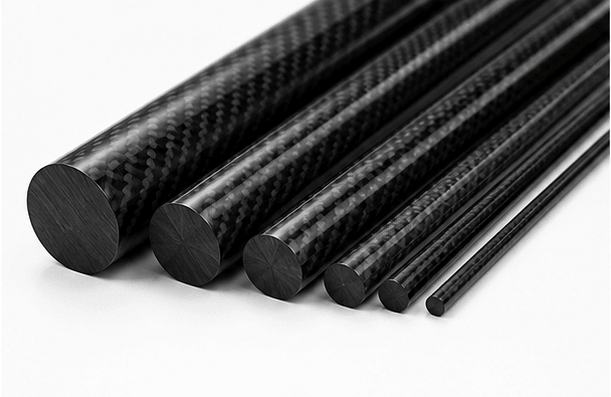
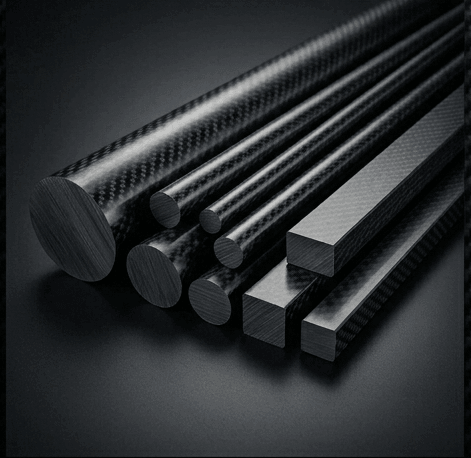
What Are Carbon Fiber Rods?
Carbon fiber rods are solid composite structural elements manufactured from continuous carbon fiber reinforcement in a polymer matrix. Most pultruded rods use a high percentage of unidirectional fibers to provide efficient axial stiffness and tensile strength.
Compared with steel, aluminum and fiberglass rods, carbon fiber rods can reduce weight, resist corrosion and maintain dimensional stability in precision assemblies.
- High axial stiffness and load-bearing capacity
- Low weight for motion-sensitive applications
- Low thermal expansion and excellent fatigue resistance
Lightweight Performance
Reduce mass without sacrificing strength
High Rigidity
Suitable for precision structures
Customizable Design
Multiple layups, finishes and thicknesses
Why Choose Carbon Fiber Rods?
High Strength-to-Weight Ratio
Carbon fiber rods provide high axial strength with a fraction of the weight of steel or aluminum, supporting lighter and more responsive structures.
Excellent Straightness
Controlled pultrusion produces consistent diameter, straightness and surface quality for automation, robotics and precision equipment.
Low Thermal Expansion
A low coefficient of thermal expansion helps carbon fiber rods maintain alignment and dimensional stability across temperature changes.
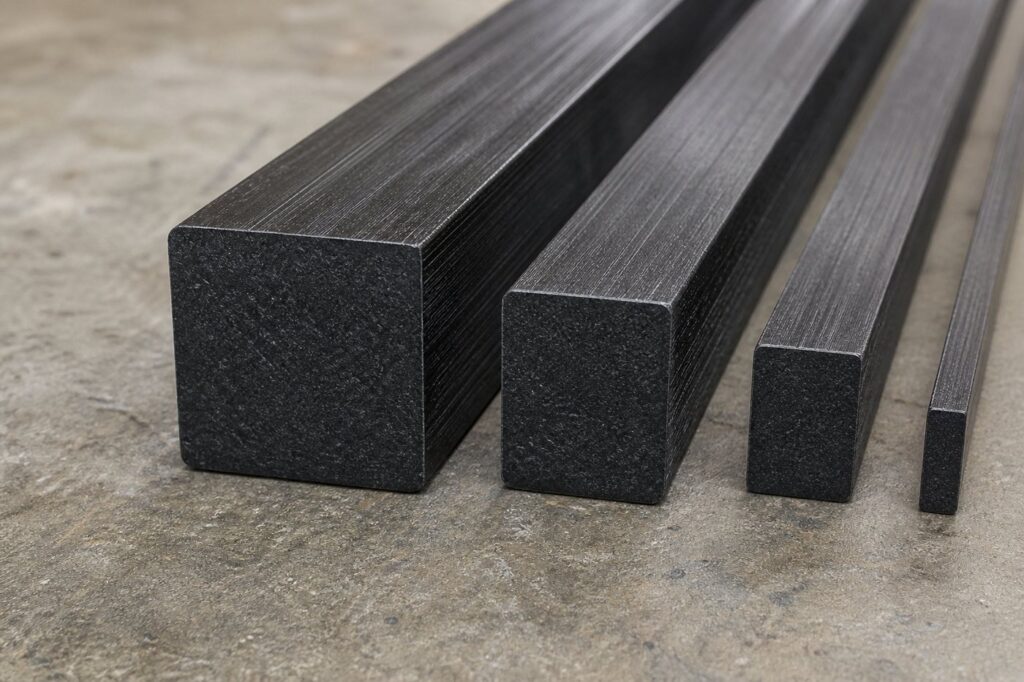
Custom Carbon Fiber Square Rods
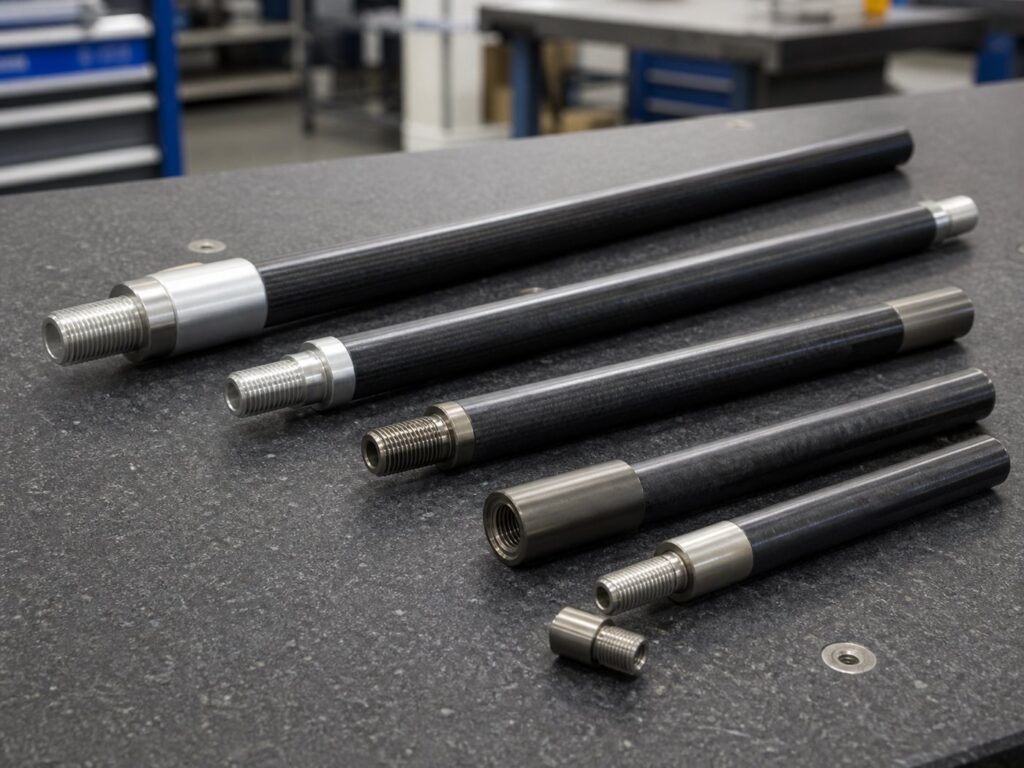
Custom Carbon Fiber Threaded Rods
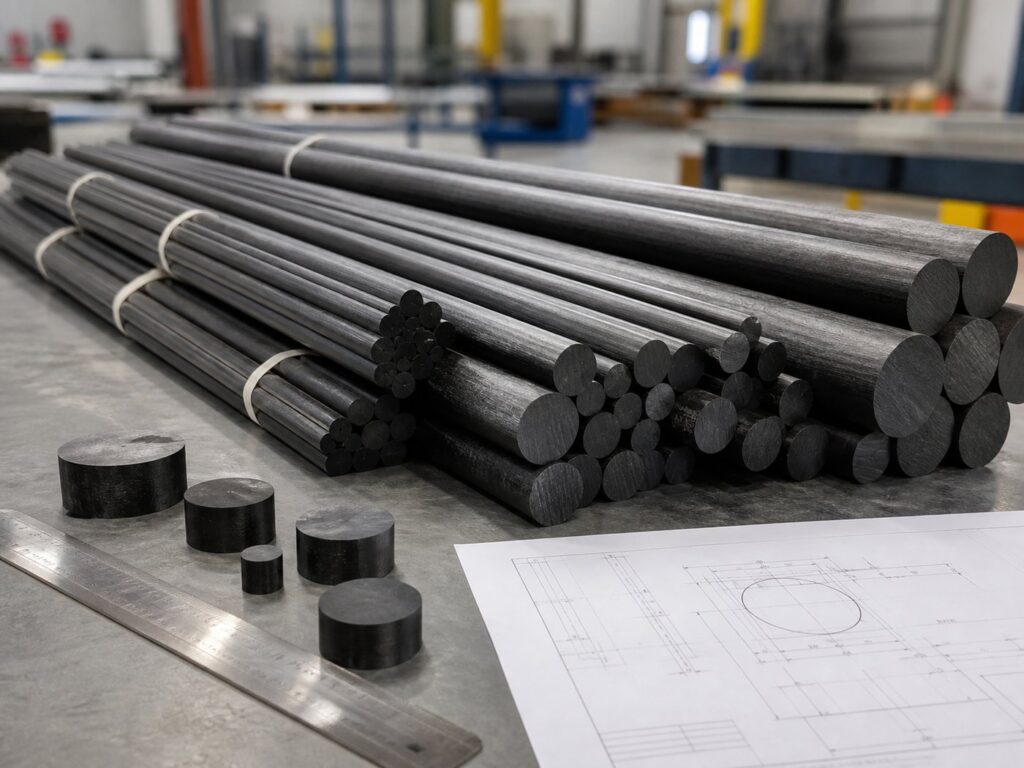
Custom Pultruded Carbon Fiber Rods
Types of Carbon Fiber Rods
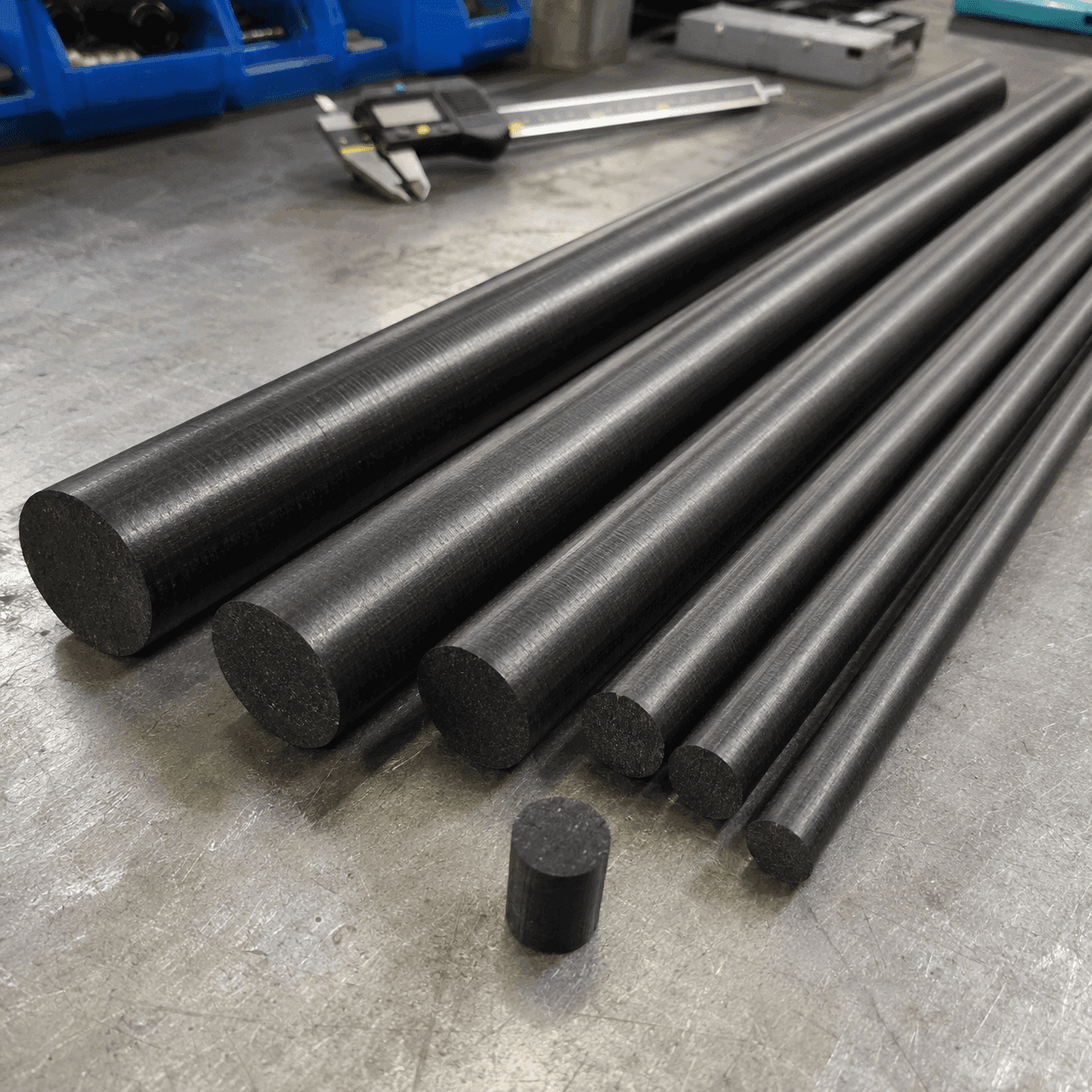
Pultruded Carbon Fiber Rods
Continuous unidirectional fibers deliver excellent axial strength, straightness and consistent surface finish.
Applications:
Structural supports • Robotics • Linear systems
Solid Carbon Fiber Rods
Solid round rods with stable diameter and high stiffness for load-bearing and precision components.
Applications:
Automation • Medical equipment • Sporting goods
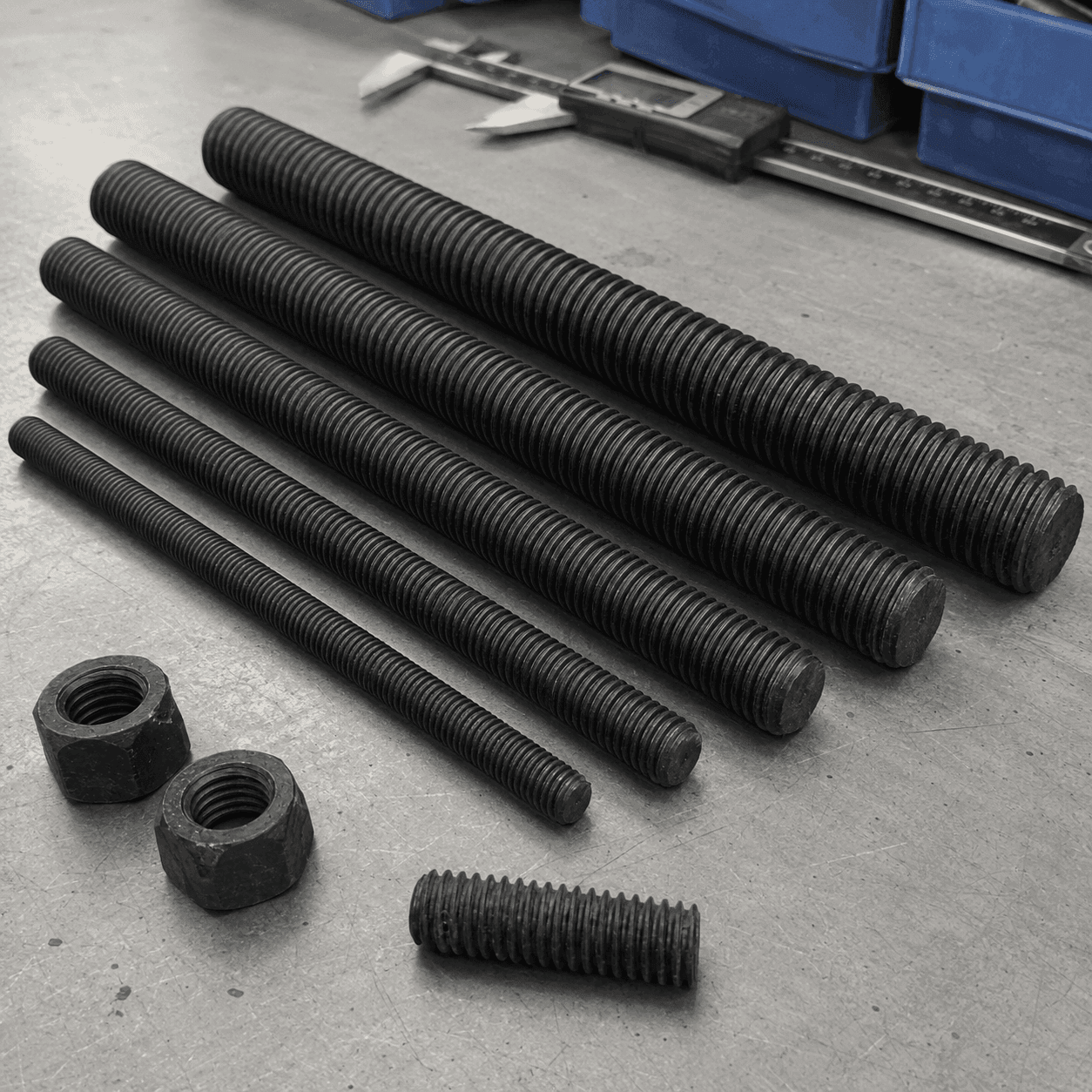
Carbon Fiber Threaded Rods
Threaded or thread-ready carbon rods for lightweight adjustable assemblies and specialized connections.
Applications:
Aerospace fixtures • Machinery • Custom assemblies
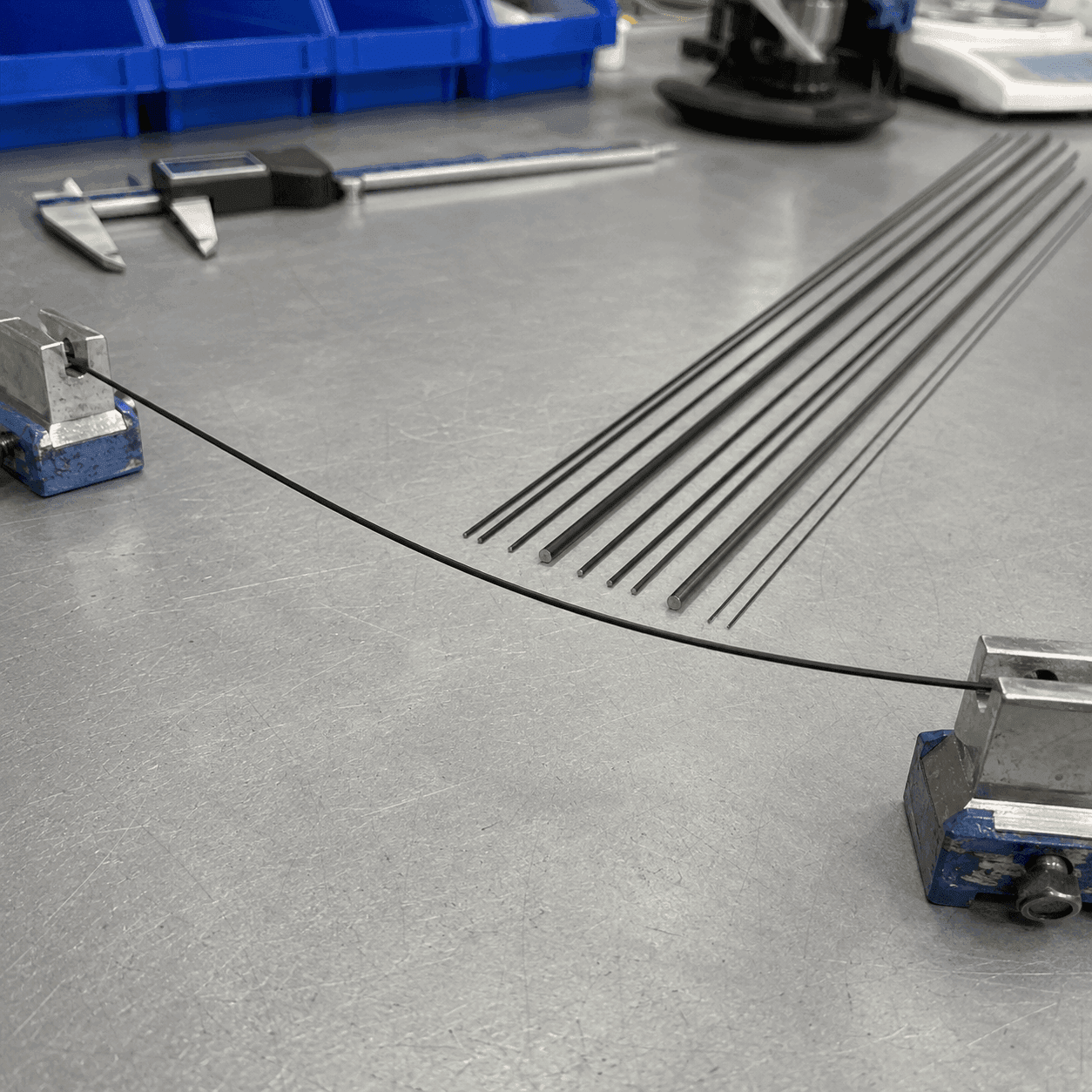
Flexible Carbon Fiber Rods
Small-diameter carbon fiber rods designed for controlled flexibility and resilient lightweight structures.
Applications:
Antenna masts • Kites • Cable routing
Custom Carbon Fiber Profiles
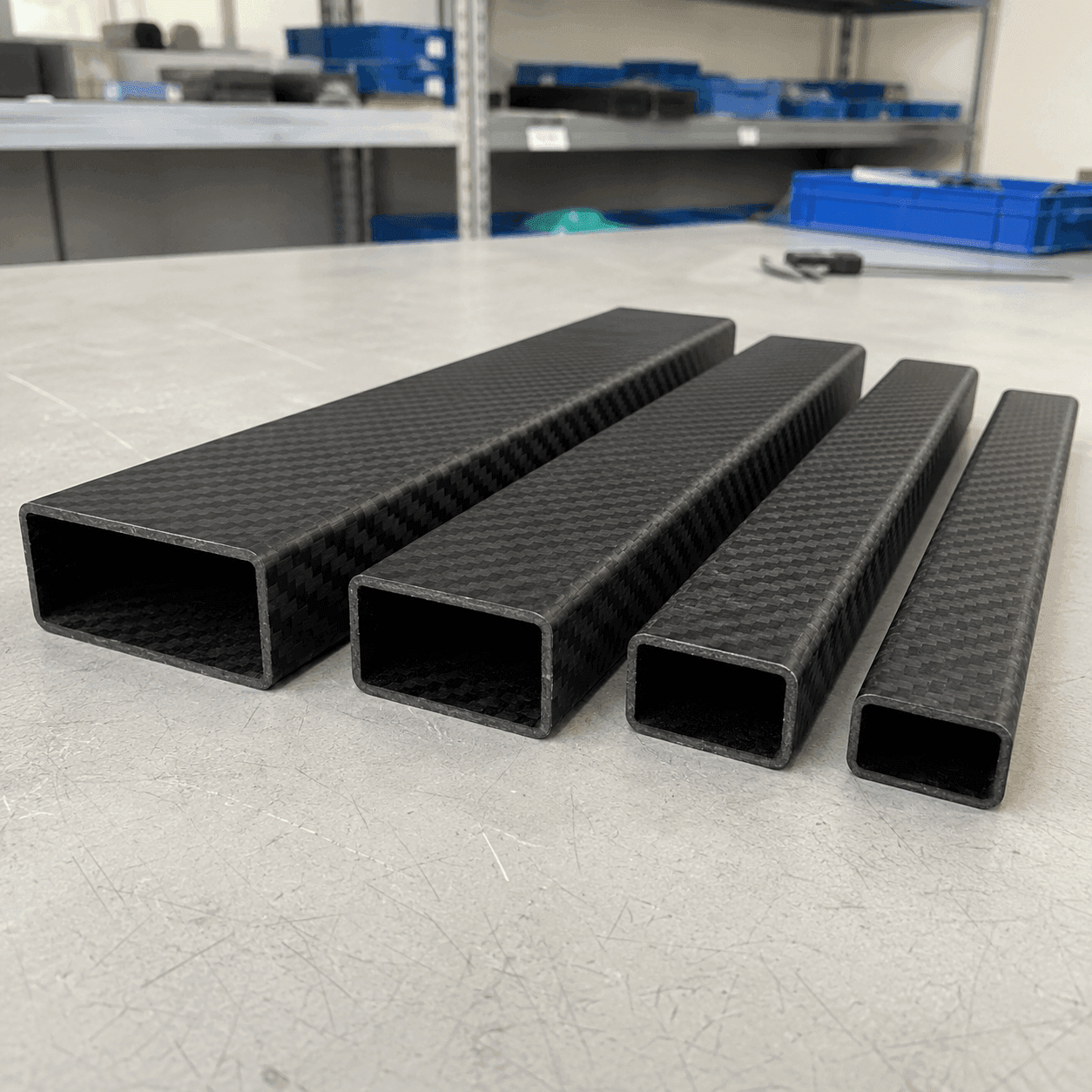
Square, rectangular and drawing-based pultruded profiles for unique OEM structural requirements.
Applications:
Industrial frames • UAVs • Custom equipment
Pultruded Carbon Fiber Rods: Material and Performance
Pultruded carbon fiber rods are manufactured by drawing continuous carbon fibers through a resin bath and precision die, then curing the composite into a consistent solid profile. The high proportion of unidirectional reinforcement delivers excellent axial tensile strength, stiffness and straightness.
This construction is well suited to linear loads, lightweight supports, robotics, automation and precision equipment. Designers should also consider transverse loads and connection details because pultruded rods are strongest along the fiber direction.
Carbon Fiber Rod Manufacturing Process
1
Fiber Selection
Select carbon fiber grade and resin system for the target performance.
2
Resin Impregnation
Guide continuous fibers through a controlled resin impregnation process.
3
Pultrusion
Pull fibers through a precision die to form a consistent solid profile.
4
Controlled Curing
Control heat and line speed to achieve full cure and dimensional stability.
5
Cutting & Machining
Cut, grind, drill, machine or prepare ends according to drawings.
6
Quality Inspection
Inspect diameter, straightness, surface finish and mechanical requirements.
Carbon Fiber Rod Specifications
| Material | Carbon Fiber + Epoxy Resin |
|---|---|
| Process | Continuous Pultrusion |
| Diameter | Standard and custom sizes |
| Length | Cut-to-length and long-length options |
| Fiber Direction | Primarily unidirectional |
| Surface | Glossy / Matte / Ground / Coated |
| Processing | Cutting, drilling, grinding, threading |
Applications of Carbon Fiber Rods
Aerospace Components
Lightweight panels and interior structures
Drone Frames
Arms, center profiles and camera mounts
Automotive Parts
Interior trim and performance components
Robotics & Automation
Arms, frames and precision structures
Sports Equipment
High-stiffness lightweight components
Custom OEM Parts
Drawing-based composite solutions
Carbon Fiber Rods vs Profiles
| Property | Carbon Fiber Rods | Fiberglass Rods | Metal Rods |
|---|---|---|---|
| Strength-to-Weight | Excellent | Good | Moderate |
| Axial Stiffness | Very High | Low to Moderate | High |
| Corrosion Resistance | Excellent | Excellent | Varies |
| Weight | Very Light | Light | Heavy |
| Best Use | Precision, lightweight structures | General flexible applications | Heavy-duty structures |
Carbon fiber rods provide unmatched axial stiffness and low weight compared with fiberglass. Fiberglass is more flexible and economical, while metal rods offer high isotropic strength but add weight and may corrode. The correct choice depends on load direction, deflection, environment and budget.
Custom Carbon Fiber Rod Manufacturing Capabilities
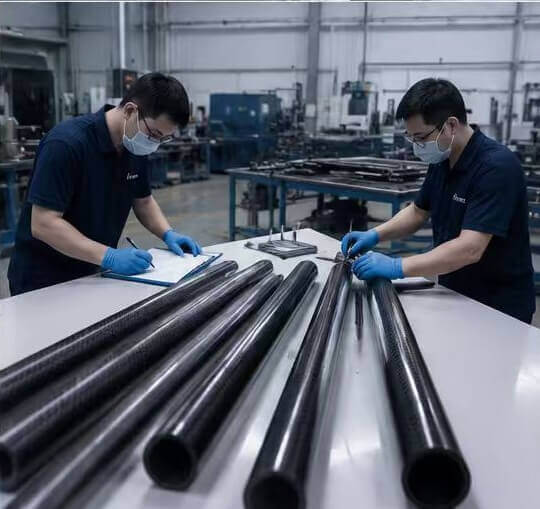
Carbosources provides drawing-based carbon fiber rod manufacturing from prototype development through repeat OEM production. Our team reviews axial load, diameter, length, straightness, surface condition and connection requirements before production.
Available customization:
- Custom diameter, length and fiber grade
- Standard epoxy and application-specific resin systems
- Glossy, matte, ground and coated surfaces
- Controlled straightness and dimensional tolerances
- CNC cutting, drilling, grinding, threading and end preparation
- Bonded metal ends, inserts and assembly-ready parts
- Prototype, small-batch and repeat volume production
How to Select the Right Carbon Fiber Rod
Selecting the right carbon fiber rod starts with the primary load. For axial tension or compression, choose an appropriate diameter, fiber grade and safety factor. For bending applications, consider span length, support conditions and expected deflection.
Connection methods—including threaded ends, bonded fittings, clamps, drilled holes and adhesive joints—affect local stress. Temperature, moisture, UV exposure, chemicals, dimensional tolerance and production quantity should also be included in the specification.