
Home › Custom Solutions › Custom Carbon Fiber Box
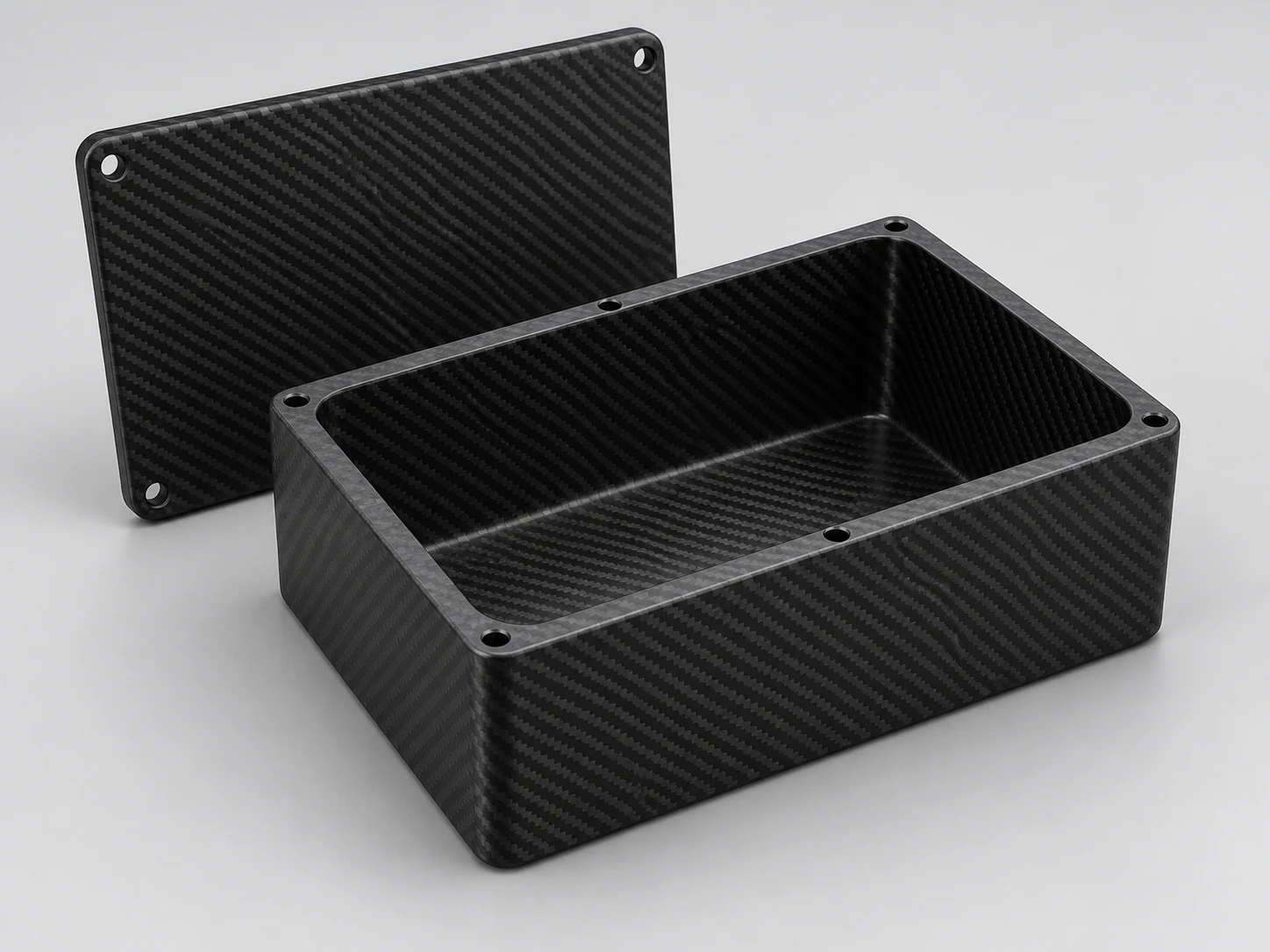
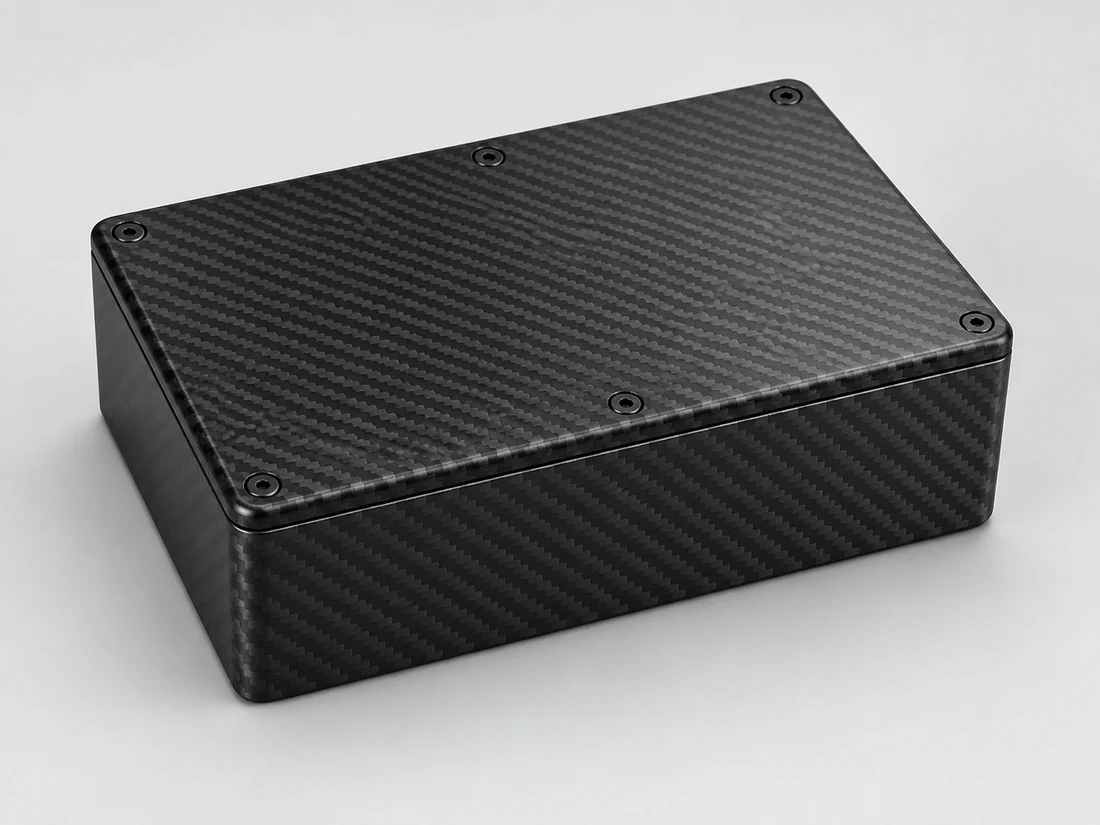
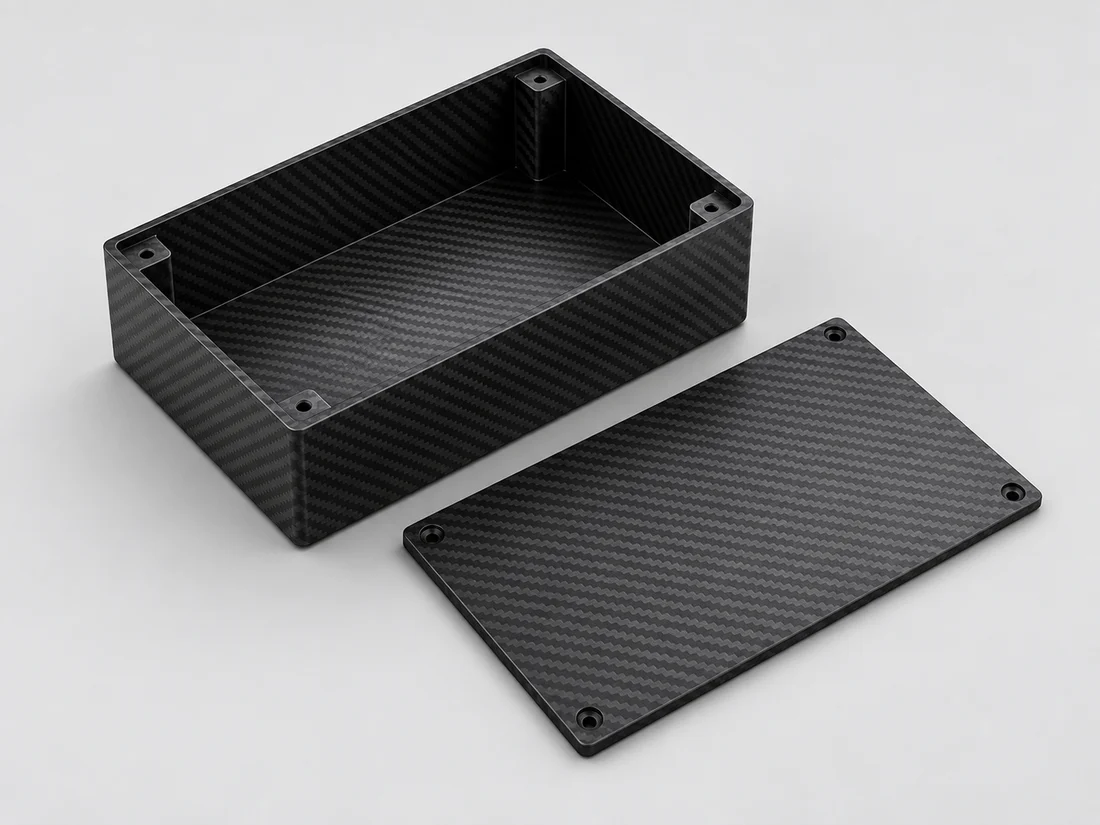
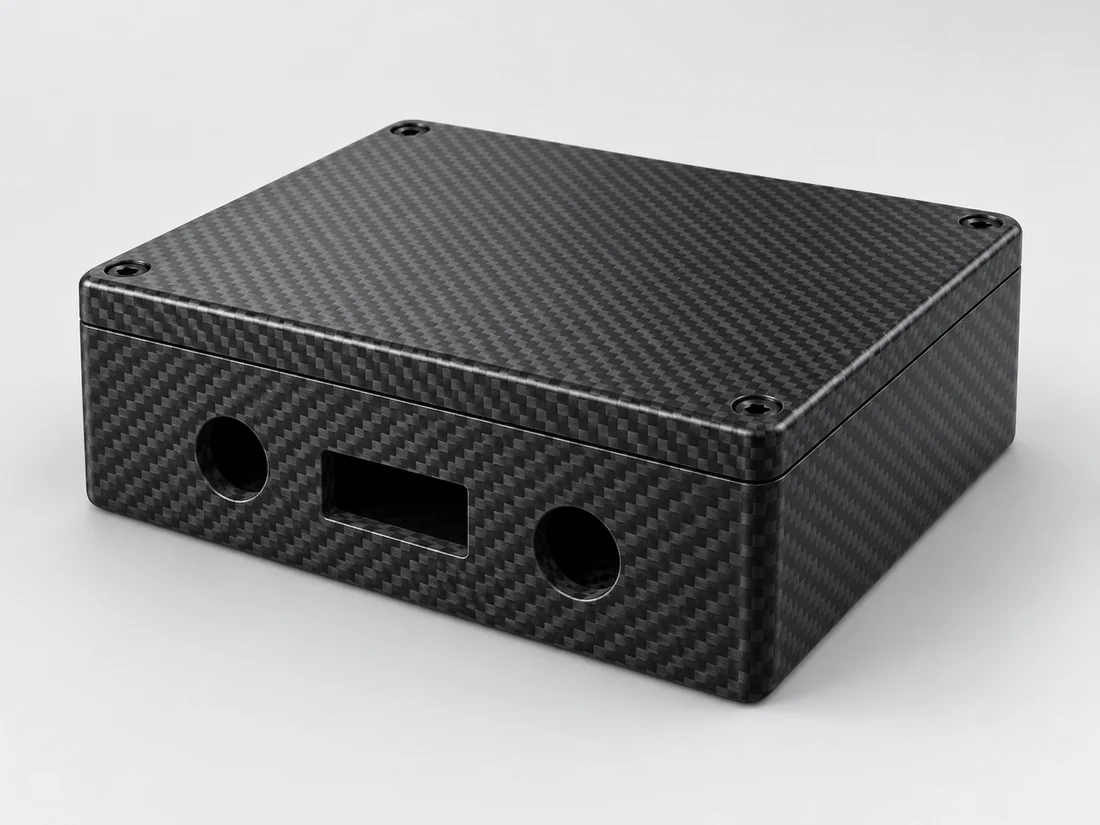
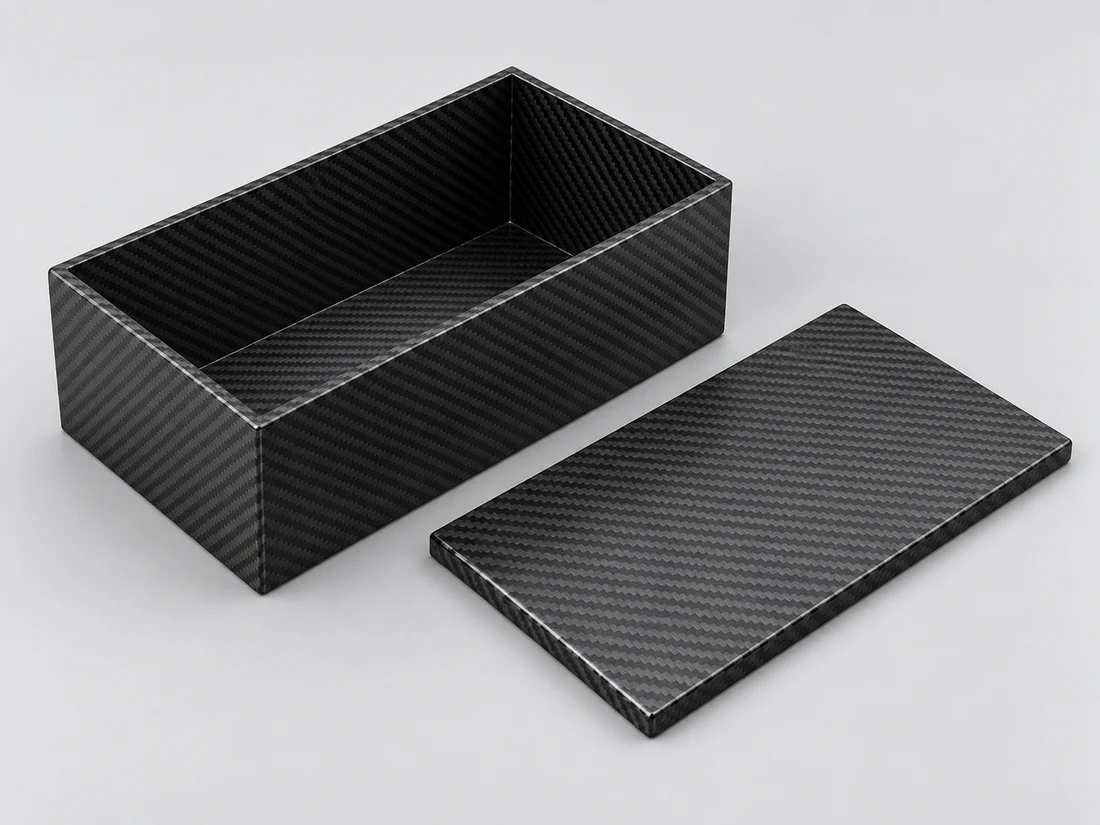
Illustrative design concepts. Final geometry, laminate and hardware follow the approved specification.
Custom Carbon Fiber Box
A custom carbon fiber box brings the shell, lid and mounting interfaces together around your equipment. Carbosources reviews your drawings or requirements for a made-to-order box, with the laminate, cutouts, finish and assembly details specified for your application.
Custom Geometry · Removable Lids · Machined Interfaces
| Product | Custom carbon fiber box / enclosure |
|---|---|
| Construction | Panel assembly or molded shell, subject to design review |
| Options | Dimensions, lid, openings, mounting and finish |
| Supply basis | Drawing-based prototype and OEM quotations |
Share the usable internal space, mounting layout and quantity to start a design review.
Choose the Box Structure Around Your Application
The first decision is how the box will be built and opened. A rectangular equipment housing, a contoured cover and a storage box place different demands on the corners, lid and attachment points. The construction route should follow the shape, access requirements and production quantity.
Panel-built boxes
Flat carbon fiber panels can be cut to a defined outline and assembled with designed corner joints or supporting angles. This approach suits rectangular geometry and allows individual panels to carry connector openings or mounting features. Joint overlap, bond area and access for assembly need space inside the box.
Molded shells with removable lids
A molded shell can incorporate curved walls, corner radii and an opening flange. The mold split, draw direction and trim line influence the geometry. A lid needs a defined locating surface and fastening arrangement; specify whether the outside envelope or usable internal space controls the design.
Storage and equipment configurations
For instruments, electronics or organized storage, define the contents before choosing the shell. Internal trays, mounting plates, dividers or foam need their own allowance. Hinges, latches and handles should be included in the agreed supply scope, with attachment points designed for the loads they transfer.
Laminate, Wall Thickness & Surface Finish
The visible carbon weave describes appearance, but does not specify the complete wall construction. Fiber orientation, ply arrangement, resin system and wall geometry all influence stiffness and strength. A broad unsupported lid and a short side wall may need different reinforcement even within the same box.
Define what the box must support: the contents, external mounting loads and any force applied through the lid or handles. Local reinforcement around fasteners and corners can be more useful than applying the same extra thickness everywhere. Wall thickness and weight targets should be agreed after reviewing the geometry and loads.
Mark cosmetic surfaces, preferred twill or plain weave, weave direction and gloss or matte finish. For a hybrid construction, identify the materials in the specification. A carbon-pattern wrap or a decorative veneer should not be described as a structural carbon fiber wall.
Related technical reading: selecting carbon fiber sheet thickness and understanding 3K weave and layup.
Lids, Cutouts & Mounting Details
Lid fit and service access
Choose a removable cover or a hinged opening according to how often the contents need service. Define the locating edge, fastener positions and opening clearance. If a gasket is required, the flange, sealing surface and compression arrangement must be designed together. A carbon fiber shell alone does not establish a waterproof rating.
Machined openings and edges
Dimension connector openings from agreed datums and include the mating component drawing. Allow room for connector bodies, cable bends and assembly tools inside the wall. Review edge distance, corner radii and countersinks before machining; holes close to an edge can leave too little laminate to carry the load. Finished edges should be checked for damage and treated as specified.
Fasteners and internal supports
For repeated disassembly, review inserts, through-fasteners or backing hardware rather than assuming a thin laminate can hold a durable tapped thread. Mounting pads and load-spreading details should suit the equipment mass and attachment loads. Include the mating material and environment when specifying metal-to-carbon joints, since electrical isolation may be needed to limit galvanic corrosion.
Custom Carbon Fiber Box Specification
Use the following fields to define the product. These are customization inputs, not fixed stock dimensions or guaranteed performance values.
| Dimensions | External envelope and minimum usable internal space; drawing units and revision |
|---|---|
| Wall construction | Laminate or panel specification, wall thickness and local reinforcement |
| Lid and access | Removable or hinged; locating features, opening clearance and fasteners |
| Interfaces | Connector cutouts, mounting holes, datums and mating-part drawings |
| Interior | Mounting plates, standoffs, inserts, dividers or lining requirements |
| Appearance | Visible faces, weave direction, finish and cosmetic acceptance criteria |
| Environment | Temperature, moisture, chemicals and electrical requirements |
| Acceptance | Critical dimensions, lid fit, assembly checks and agreed functional tests |
| Order scope | Shell only or assembly; prototype quantity and repeat-production needs |
Example: usable space versus outside size
Illustrative sizing example: a simple rectangular box with a 200 × 120 mm outside footprint and uniform 2 mm walls has a nominal 196 × 116 mm inside footprint before corner joints, inserts or lining are considered. This is a geometric example, not a recommended wall thickness. Define minimum clear space separately, including the height lost to the lid and internal supports.
Equipment Integration & Verification
For an electronics box, identify insulation, grounding, antenna and heat-management requirements early. Carbon fiber is electrically conductive; it should not be treated as an insulating housing. EMI shielding depends on the complete enclosure, including joints and openings, and requires application-specific design and validation.
For outdoor or moisture-exposed use, review the lid seal, cable entries and metal interfaces as a system. Any required ingress, temperature or vibration performance should be defined with its acceptance method. Do not infer a test rating from the surface finish or the material name.
Before approving a first article, check the drawing revision, outside dimensions, minimum internal clearances, hole positions and lid seating. Trial-fit the mating equipment and hardware. Define any leak, load or electrical checks separately so the inspection scope matches the actual use.
Custom Carbon Fiber Box FAQs
Send the CAD model or dimensioned drawing together with the application and quantity. Carbosources can review the box geometry, laminate, machining and assembly requirements before confirming the manufacturing scope.
Include these features in the drawing or project brief. Lid location, connector access, inserts and equipment supports need to be reviewed together so the finished box can be assembled and serviced.
There is no single thickness suitable for every box. Unsupported spans, loads, fiber orientation, corners and mounting details influence the design. Supply the available space and load conditions so thickness and reinforcement can be reviewed.
No. Moisture protection depends on the shell, joints, lid seal and cable entries. Carbon fiber is conductive, so electrical insulation must be addressed in the design. Required performance needs a defined verification method.
Include the prototype quantity and intended production quantity in your inquiry. The practical route, tooling requirement, price and schedule are confirmed for the specific design.
The main factors include geometry, laminate, tooling, machining, hardware, finish, quantity and inspection scope. State whether you need the shell only or an assembled box so the quotation covers the correct deliverable.
Discuss Your Custom Box Design
Send your drawing or sketch, minimum internal space, intended use and quantity. Include the lid arrangement, openings, mounting points and preferred finish. We will review the information needed to define your custom carbon fiber box and prepare a project-specific quotation.
For broader manufacturing options, see our custom carbon fiber parts page.