ENGINEERING & PROCUREMENT GUIDE
The right carbon fiber sheet thickness depends on the finished part, its unsupported span, mounting method, loads and acceptable deflection. Start with those requirements, then review the laminate and available thicknesses. A thickness number on its own cannot establish whether a component will perform as intended.
Before choosing a thickness: define the part size, the distance between supports, the load direction, the allowed movement and the features that control assembly fit. If any are unknown, identify them as open questions in your inquiry.
What Determines the Right Carbon Fiber Sheet Thickness?
A useful selection starts with the limiting requirement. A cover may mainly need to stay flat and protect its contents. A mounting plate may need to maintain alignment. A load-carrying component also needs an appropriate strength assessment. These are different design questions, even when the parts look similar.
Stiffness describes resistance to deformation; strength concerns resistance to failure. A part can remain intact yet bend more than the assembly permits. Include a deflection target when movement matters, instead of asking only whether a sheet is “strong enough.”
Increasing thickness can improve bending rigidity, but it also changes weight, assembly clearances and manufacturing requirements. Compare complete candidate designs rather than selecting the thickest plate that fits the budget.
Comparing 0.5mm, 1mm, 2mm, 3mm and 5mm Sheets
The nominal sizes below are comparison points, not an application approval or a statement of Carbosources stock. Availability, laminate construction and achievable thickness tolerance require confirmation for the project. The same nominal carbon fiber plate thickness can represent different laminate specifications.
0.5mm carbon fiber sheet
For a proposed facing or overlay, establish whether a backing carries the load.
Review: Check bonding, handling, edge exposure and surface requirements.
1mm carbon fiber sheet
For a proposed cover, define its unsupported span and mounting points.
Review: Check allowable movement and local support around fasteners.
2mm carbon fiber sheet
For a proposed cut plate, identify what controls fit and rigidity.
Review: Review cutouts, hole locations, material orientation and deflection.
3mm carbon fiber sheet
Compare the complete design with thinner alternatives.
Review: Confirm the benefit of added thickness against mass and assembly space.
5mm carbon fiber sheet
Review why a thicker solid plate is being considered.
Review: Check weight, machining access and whether support changes merit evaluation.
How Sheet Size and Mounting Method Affect Rigidity
Raw sheet size is useful for purchasing, but the finished geometry and unsupported span are more useful for assessing how the part behaves. Show the distance between supports, the position of the load and any overhanging edges. A drawing that shows only overall length and width leaves important information missing.
Compare these two illustrative arrangements using the same material and thickness. They are design explanations, not test results:
A. Closely supported cover
The panel is supported around its perimeter and has a short clear span. Review local movement, attachment points and edge fit.
B. Plate spanning two mounts
The load acts between separated supports. Review the clear span and permitted deflection, as well as stresses around the mounts. Do not transfer the cover’s thickness choice directly to this arrangement.
Changing the support arrangement may be worth evaluating alongside a thickness change. For some bending applications, a stiffened or sandwich construction may also merit a separate design assessment; it is not interchangeable with a solid sheet of the same overall thickness. Composites Knowledge Network discusses these structural forms.
Check Laminate Construction and Surface Finish
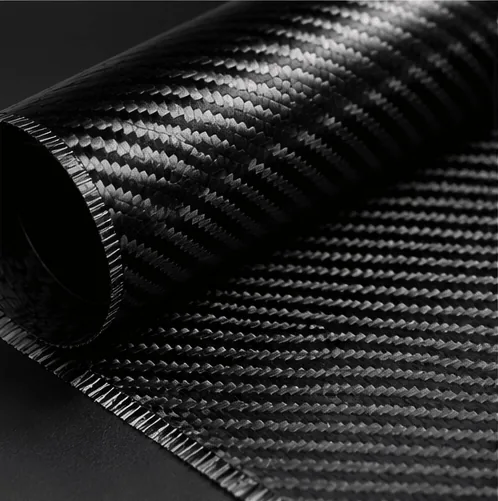
A 3K carbon fiber laminate sheet description does not, by itself, define the complete material. Ask for the laminate construction relevant to your design, including reinforcement directions and resin requirements. Bending behavior depends on how the layers contribute through the thickness, not only the appearance of the outer surface.
A glossy carbon fiber sheet and a matte carbon fiber sheet describe finish choices. Neither finish label is a stiffness rating. Identify visible faces and any surfaces that will be bonded, coated or machined so appearance and processing requirements can be reviewed together.
Keep material selection and thickness selection connected. See the carbon fiber material selection guide for a broader discussion, and the custom carbon fiber sheets page for related product information. For the engineering basis, CKN’s laminate mechanics reference explains how individual layers enter the stiffness calculation.
Thickness Considerations for CNC Cutting and Drilling
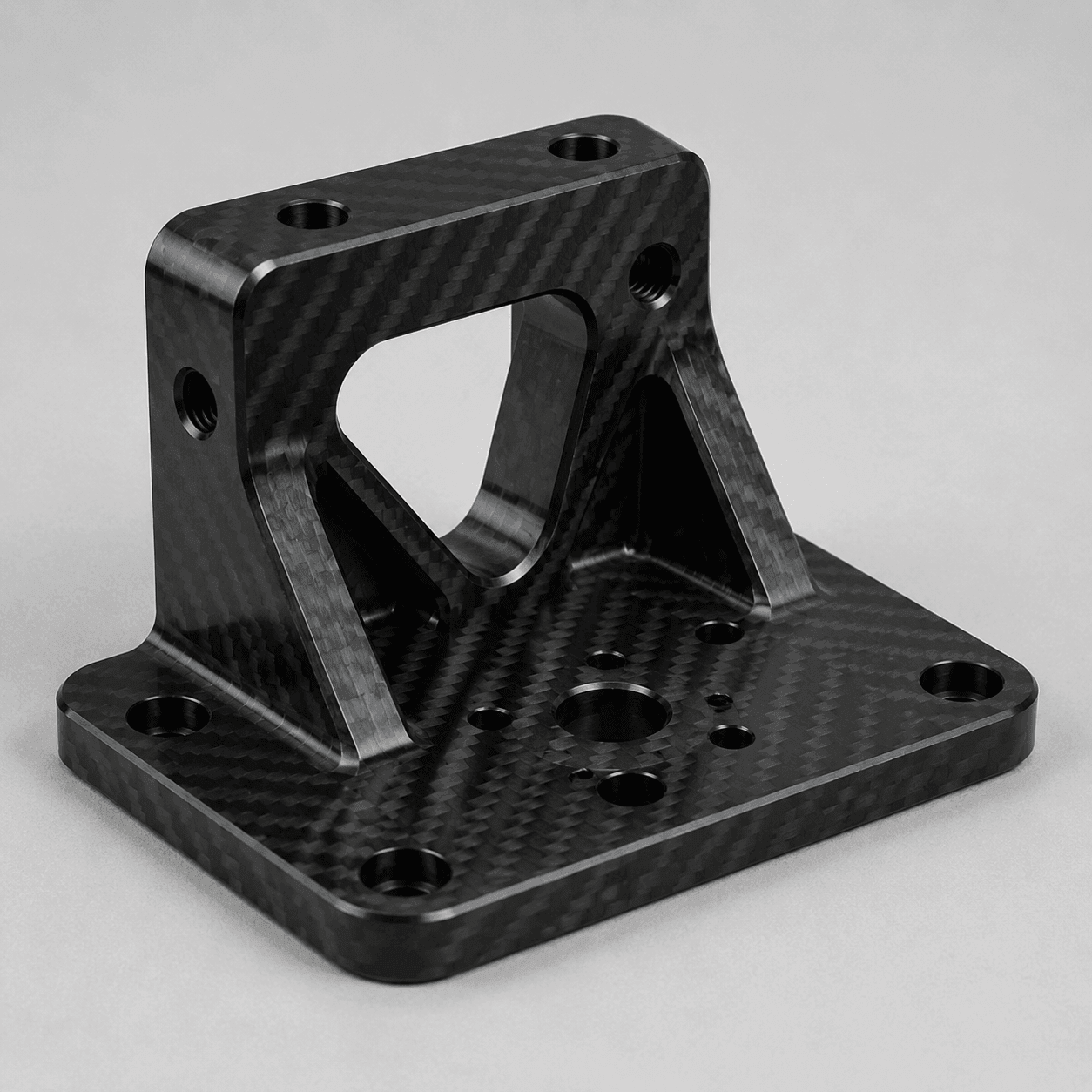
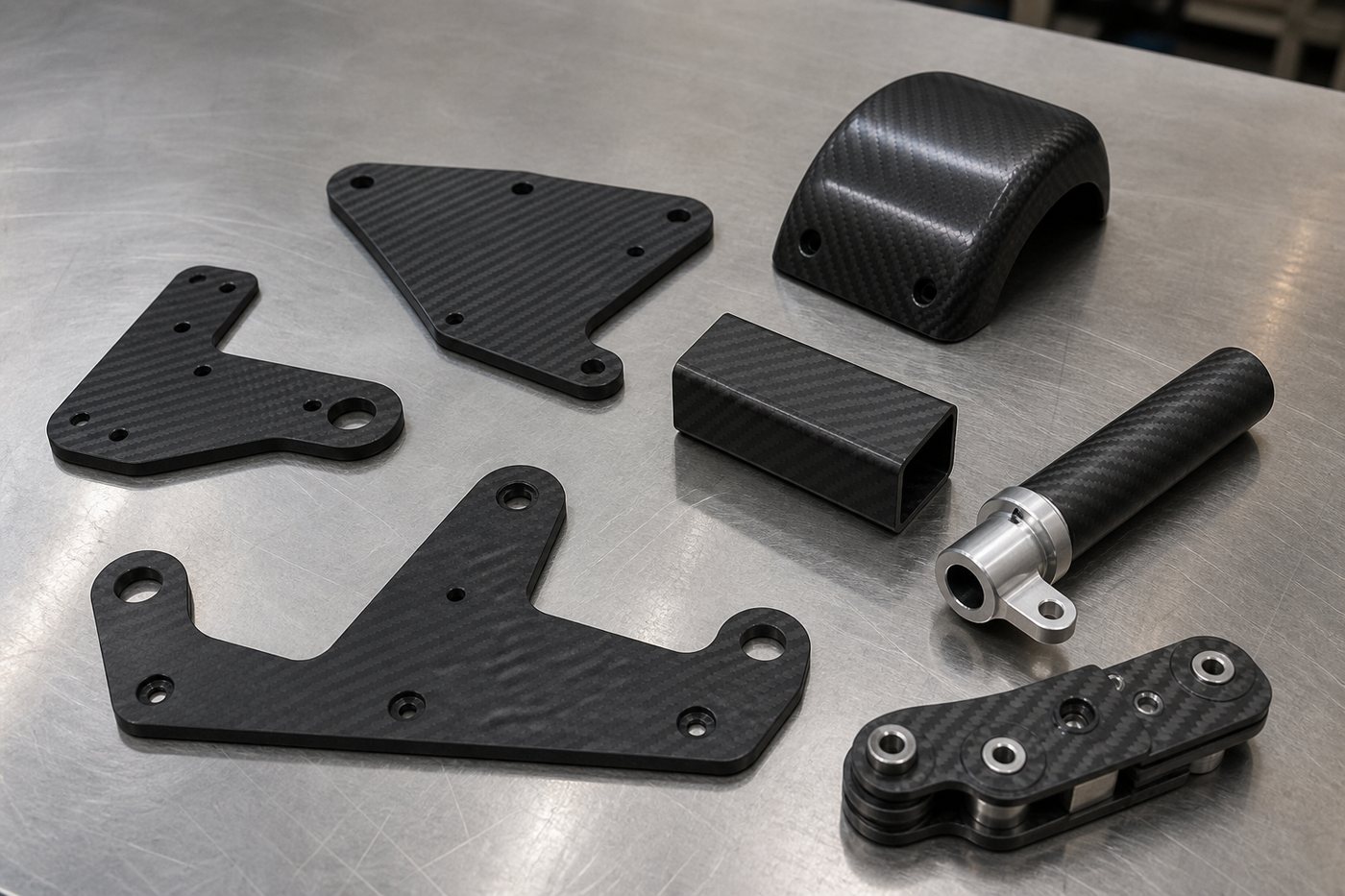
For CNC-cut carbon fiber sheets, submit the finished part drawing before finalizing the material. Holes, slots, narrow sections and recesses change the geometry being assessed. Identify functional features and describe how the part will be held or joined in the assembly.
Keep these requirements separate in the drawing:
- Thickness tolerance: the permitted variation in the finished plate thickness.
- Hole tolerance: the required diameter and location of a hole, with clear references.
- Edge quality: the agreed condition of machined edges, including any appearance or finishing requirements.
A tighter hole tolerance does not automatically establish tighter sheet thickness control. Likewise, selecting a thicker blank does not guarantee an acceptable edge after CNC cutting or drilling. Ask the supplier to review the laminate, geometry and inspection requirements together. For related operations, visit CNC machined carbon fiber parts.
When Should You Consider Custom Thickness?
Custom thickness is worth discussing when available options conflict with an important requirement, such as a mating slot, a weight limit or a defined laminate design. Give the reason for the requested value and identify whether it is mandatory or a preference.
Ask what nominal thickness and tolerance can be produced, whether the proposed construction changes, and what the quantity means for feasibility and cost. Do not assume a laminate can be made to any decimal thickness, or that machining its faces is an acceptable substitute without reviewing the resulting material.
Common Thickness Selection Questions
Is 1mm carbon fiber sheet rigid enough for a panel?
Thickness alone cannot answer that. Provide the unsupported span, mounting method, load, laminate and maximum permitted deflection. A supported facing and a freely spanning panel require different assessments.
Is 2mm or 3mm carbon fiber better for my part?
Compare both against the same functional requirements. Review stiffness, strength where relevant, mass, hole details and assembly clearance. Approve the selected design through suitable analysis or sample evaluation rather than assuming the thicker option is necessary.
Does thicker carbon fiber always mean a better part?
No. Additional thickness may help a particular requirement while adding mass or creating a fit problem. Review the complete part, including its supports and connections.
Can I request a custom carbon fiber sheet thickness?
Yes, you can include a custom thickness request in your inquiry. Availability, construction, tolerance, quantity and production feasibility still need to be confirmed before ordering.
What to Send for a Thickness Recommendation and Quotation
To make a thickness recommendation useful, send the application requirements alongside the drawing. A clear inquiry package includes:
- Part drawing or model, units, revision and finished dimensions.
- Mounting method, support locations and mating components.
- Loads, directions and acceptable deflection, or the questions still to be resolved.
- Required laminate, environment, finish and any permitted alternatives.
- CNC cutting, drilling, critical tolerances and edge quality requirements.
- Sample quantity, expected batch quantity, delivery destination and timing.
Before production, agree on the material and drawing revision, inspection scope and any sample approval required. A quotation confirms a commercial scope; it should not be mistaken for validation of an unspecified design.
Share your drawing and project requirements with Carbosources to discuss the sheet and machining specification. If thickness is undecided, say so and include the conditions that will guide the review.
Further reading: Zhonglong’s sheet thickness guide and Hindustan Engineers’ sheet selection overview. Supplier-specific dimensions and recommendations in these references are not Carbosources specifications.